


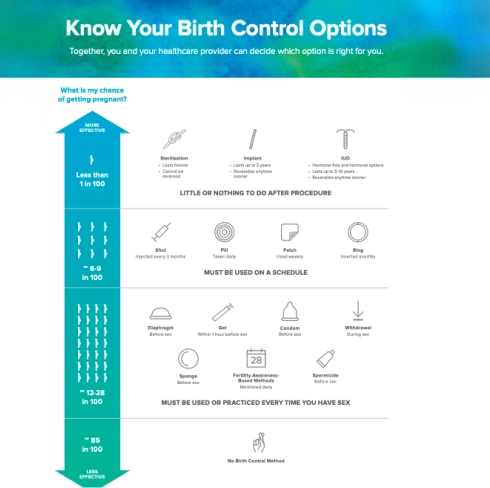


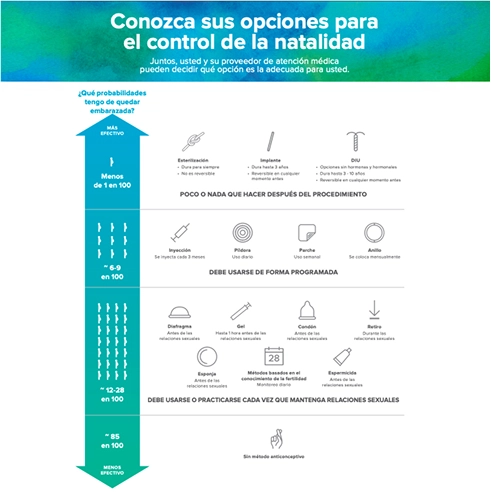
Select a language to download the Paragard Patient Fact Sheet, available in 20+ languages.
FAQS
MOST POPULAR QUESTIONS
Can I have an MRI with the Paragard® IUD in place?
Paragard can be safely scanned with an MRI only under specific conditions. Before you have an MRI, tell your healthcare provider that you have Paragard, an intrauterine device (IUD), in place.
Will the Paragard IUD affect my period?
At first, you may have heavier and longer periods with spotting in between; usually it decreases over time. Call your healthcare provider if the bleeding remains heavier or longer and spotting continues.
How long does the Paragard IUD last?
Once in place, Paragard provides continuous pregnancy prevention for up to 10 years but can be removed by a healthcare provider at any time sooner if you decide you want to get pregnant. After removal, the effects of Paragard are immediately reversible.
How much does the Paragard IUD cost?
If you have health insurance:
Paragard is fully covered under most insurance plans—this may mean no co-pay, deductible or out-of-pocket costs. Check with your insurance provider to confirm coverage related to your individual plan. Fees for the Paragard placement procedure may apply.
Here’s how to check:
- Call the customer service number on the back of your insurance card
- Tell them that Paragard is a healthcare provider-administered method of birth control
- Ask them to check if Paragard is covered under the Affordable Care Act
- Provide them with the J code for Paragard, which is J7300
- Ask if you will have any out-of-pocket costs, or if Paragard is only partially covered under your plan
If your medical insurance says that Paragard is not covered as a medical benefit, then it may be covered as a pharmacy benefit. To check if it’s covered as a pharmacy benefit, call the customer service number on the back of your prescription card.
If your health insurance doesn’t cover Paragard or you don’t have health insurance.
If you don’t have insurance, or if your insurance doesn’t cover Paragard, you may self-pay for your Paragard prescription by contacting our specialty pharmacy partner below.
Biologics by McKesson
Phone: 1-888-275-8596
What are the common side effects of the Paragard IUD?
Common side effects of Paragard include:
| Anemia (low red blood cell count) | Pain during sex |
| Prolonged periods | Vaginal irritation |
| Backache | Expulsion (complete or partial) |
| Spotting | Painful periods |
| Vaginal discharge | Pain and cramping |
This is not a complete list of possible side effects. Tell your healthcare provider about any side effect that bothers you or does not go away.
You are encouraged to report negative side effects of prescription drugs to the FDA at www.fda.gov/medwatch or call 1-800-FDA-2088.
What if I become pregnant while using the Paragard IUD?
If you think you are pregnant, contact your healthcare provider right away. If you are pregnant while using Paragard, you may have an ectopic pregnancy which means the pregnancy is not in your uterus. Unusual vaginal bleeding or abdominal pain may be signs of an ectopic pregnancy. Ectopic pregnancy is a medical emergency that often requires surgery; it can cause internal bleeding, infertility and even death.
There are also risks if you get pregnant and Paragard is in your uterus. Severe infection, miscarriage, premature delivery, and even death can occur. Because of this, your healthcare provider may try to remove Paragard, even though removing it may cause a miscarriage.
If you continue your pregnancy with Paragard in place, see your healthcare provider regularly. Call your healthcare provider right away if you experience flu-like symptoms, fever, chills, cramping, pain, bleeding, vaginal discharge, or fluid leaking from your vagina.
It is not known if Paragard can cause long-term effects on the fetus if it stays in place during a pregnancy.
PARAGARD BASICS
What is an IUD?
An IUD (intrauterine device)—also known as an IUS (intrauterine system)—is a small device that’s placed in a woman’s uterus by a healthcare provider to prevent pregnancy. IUDs are long-lasting, reversible, and one of the most effective birth control methods available at over 99% effective.
There are two types of IUDs in the U.S.—hormonal and hormone-free.
What is the Paragard IUD?
Paragard is a small IUD (intrauterine device)—also known as an IUS (intrauterine system)—that’s over 99% effective at preventing pregnancy. It works using one simple active ingredient—copper. Once in place, it provides continuous pregnancy prevention for as little or as long as you want—up to 10 years.
How effective is the Paragard IUD at preventing pregnancy?
Paragard is one of the most effective methods of birth control available*. It’s over 99% effective at preventing pregnancy.
*Excluding sterilization
How does the Paragard IUD work?
Paragard works by preventing sperm from reaching and fertilizing the egg.
Because Paragard is 100% hormone free, it won’t prevent your natural menstrual cycle or stop you from ovulating each month. At first, periods may become heavier and longer with spotting in between.
Does Paragard contain hormones?
No, Paragard is 100% hormone free.
Why consider a hormone-free birth control method?
Hormone-free birth control methods like Paragard:
Won’t prevent your natural menstrual cycle:
Paragard won’t prevent a woman’s natural menstrual cycle each month, but periods may become heavier and longer with spotting in between.
Don’t stop ovulation:
Paragard won’t stop you from ovulating each month.
Are immediately reversible:
Because Paragard doesn’t stop you from ovulating, after removal the effects of Paragard are immediately reversible.
How big is the Paragard IUD?
Paragard measures 1.26” wide and 1.42” high and weighs less than one (1) gram.
What does the Paragard IUD look like?
Paragard is a small, T-shaped IUD—made of soft, flexible plastic wrapped with a thin layer of copper around the arms and stem. Two thin white threads are attached to the stem (lower end) of Paragard.

Not actual size.
What is the Paragard IUD made of?
The plastic “T” frame of Paragard is made of polyethylene and barium sulfate. The frame is wrapped with a thin layer of copper around the arms and stem. Two thin monofilament polyethylene threads are attached to the bottom. Paragard is not made with natural rubber latex.
How long does the Paragard® IUD last?
Once in place, Paragard provides continuous pregnancy prevention for up to 10 years but can be removed by a healthcare provider at any time sooner if you decide you want to get pregnant. After removal, the effects of Paragard are immediately reversible.
Do I need to use the Paragard IUD for 10 years?
No. Paragard lasts for up to 10 years but can be removed by a healthcare provider whenever you choose.
What if I change my mind and want to become pregnant?
If you decide you want to get pregnant, you can ask your healthcare provider to remove Paragard at any time. After removal, the effects of Paragard are immediately reversible.
Can I use the Paragard IUD if I’ve never had a child?
Yes. Paragard can be used regardless of whether you’ve had a child.
What if I decide I want (more) children?
If you decide you want to get pregnant, you can ask your healthcare provider to remove Paragard at any time. After removal, the effects of Paragard are immediately reversible.
How do I get the Paragard IUD?
Paragard can be placed by an OB/GYN or other trained healthcare provider.
Does my insurance cover the Paragard® IUD?
If you have health insurance:
Paragard is fully covered under most insurance plans—this may mean no co-pay, deductible or out-of-pocket costs. Check with your insurance provider to confirm coverage related to your individual plan. Fees for the Paragard placement procedure may apply.
Here’s how to check:
- Call the customer service number on the back of your insurance card
- Tell them that Paragard is a healthcare provider-administered method of birth control
- Ask them to check if Paragard is covered under the Affordable Care Act
- Provide them with the J code for Paragard, which is J7300
- Ask if you will have any out-of-pocket costs, or if Paragard is only partially covered under your plan
If your medical insurance says that Paragard is not covered as a medical benefit, then it may be covered as a pharmacy benefit. To check if it’s covered as a pharmacy benefit, call the customer service number on the back of your prescription card.
If you don’t have insurance or your insurance doesn’t cover Paragard:
If you don’t have insurance, or if your insurance doesn’t cover Paragard, you may self-pay for your Paragard prescription by contacting our specialty pharmacy partner below.
Biologics by McKesson
Phone: 1-888-275-8596
I don’t have insurance. Can I still get the Paragard IUD?
If you don’t have insurance, you may self-pay for your Paragard prescription by contacting our specialty pharmacy partner below.
Biologics by McKesson
Phone: 1-888-275-8596
Does the Paragard IUD expire?
Once in place, Paragard provides continuous pregnancy prevention for up to 10 years. After 10 years, you should have your Paragard removed by your healthcare provider and replaced if you wish to continue using it.
Where is the Paragard IUD made?
Paragard is proudly made in the USA.
WHAT TO EXPECT
Will Paragard affect my period?
At first, you may have heavier and longer periods with spotting in between; usually it decreases over time. Call your healthcare provider if the bleeding remains heavier or longer and spotting continues.
Can I use tampons with the Paragard IUD?
Yes. You may use tampons while using Paragard.
Will I be able to feel the Paragard IUD?
You shouldn’t be able to feel Paragard inside of your uterus. The only part you should be able to feel are the two thin threads that extend out of the cervix. You should do a monthly self-check of the threads to ensure Paragard is still in place.
Will my partner or I be able to feel the Paragard IUD during sex?
Since Paragard is placed in the uterus, not in the vagina, you and your partner should not be able to feel Paragard during sex. Sometimes your partner may feel the threads. If this occurs, or if intercourse is painful, you should speak with your healthcare provider.
How do I check the threads of the Paragard IUD?
You should check that Paragard is in the right place by feeling the threads once a month. Your healthcare provider should teach you how to do this during your placement appointment.
- Start by washing your hands thoroughly with soap and water to prevent infection.
- Find a comfortable position, such as sitting on the toilet or squatting.
- Reach up to the top of your vagina with clean fingers to feel the 2 threads. Do not pull on the threads.
- The threads should feel like thin fishing line and should extend about 1–2 inches from your cervix.
If you feel changes in the length of the threads, you cannot feel the threads, or you can feel any other part of Paragard other than the threads, Paragard may not be in the right place and may not prevent pregnancy. If this happens, use back-up birth control and call your healthcare provider right away.

You should be able to feel the short threads attached to Paragard with your finger.
I can't feel the threads of the Paragard IUD; what should I do?
Call your healthcare provider right away if you cannot feel the Paragard threads or can feel the threads are much longer. In the meantime, be sure to use a back-up birth control method.
Are women satisfied with the Paragard IUD?
According to a study of over 5,000 women, 9 out of 10 women reported they were satisfied with Paragard when surveyed 3 and 6 months after placement.
The study included 5011 long-acting reversible contraceptive (LARC) users (826 using Paragard) who were asked to report changes in bleeding and cramping since their LARC was placed. LARCs included the contraceptive implant and intrauterine devices.
PLACEMENT & REMOVAL
How is Paragard placed?
Paragard is placed in your uterus by a healthcare provider during a routine, nonsurgical office visit.
To place Paragard, your healthcare provider will:
- Slide a plastic tube containing Paragard into your uterus
- Remove the tube, leaving Paragard inside your uterus
- Trim the threads so they are just long enough for you to feel with your fingers when doing a self-check
Is Paragard placement painful/does it hurt?
Everyone is different, and some women may experience discomfort during or after placement. As Paragard goes in, you may feel cramping or pinching; some women feel faint, nauseated, or dizzy for a few minutes afterward.
How soon after I give birth can I get the Paragard IUD placed?
Paragard can be placed immediately after childbirth (postpartum) or during the second postpartum month.
Placement immediately after delivery may result in a higher risk of expulsion. Unless placed immediately postpartum, placement should be delayed to the second postpartum month.
Talk to your healthcare provider in advance if you would like to schedule a postpartum placement.
How is Paragard removed?
Paragard removal is done by a healthcare provider during a routine office visit and typically takes a few minutes.
To remove Paragard, your healthcare provider will use an instrument to grasp the exposed threads of Paragard and pull downward to remove Paragard.
Is Paragard removal painful?
Some women experience discomfort during removal; however, the procedure generally takes minutes. In some cases, Paragard may be hard to remove because it is stuck in the uterus. Surgery may sometimes be needed to remove Paragard.
How long does Paragard removal take?
Paragard removal is done by a healthcare provider during a routine office visit and typically takes just a few minutes.
SAFETY & SIDE EFFECTS
Is the Paragard IUD FDA approved?
Yes. Paragard has been FDA approved in the USA for over 30 years.
Is the copper in the Paragard IUD safe?
Paragard is a copper-containing IUD that’s been FDA approved for over 30 years. You should not use Paragard if you have Wilson’s disease (a disorder in how the body handles copper) or an allergy to copper.
Who should not use Paragard?
You should not use Paragard if you:
- Are or might be pregnant
- Have an abnormally shaped uterus
- Have pelvic inflammatory disease (PID) or are at high risk of PID
- Have had a uterine infection after pregnancy or abortion in the past 3 months
- Get infections easily
- Have an infection in your cervix
- Have cancer of the uterus or cervix
- Have unexplained vaginal bleeding
- Have a previously placed IUD that has not been removed
- Have Wilson’s disease
- Are allergic to any component of Paragard
Before placement, tell your healthcare provider if you have any of these conditions, a slow heart beat, dizziness, seizures, recently had a baby, are breastfeeding, or have AIDS, HIV, or any sexually transmitted infection.
What are the common side effects of the Paragard IUD?
Common side effects of Paragard include:
| Anemia (low red blood cell count) | Pain during sex |
| Prolonged periods | Vaginal irritation |
| Backache | Expulsion (complete or partial) |
| Spotting | Painful periods |
| Vaginal discharge | Pain and cramping |
This is not a complete list of possible side effects. Tell your healthcare provider about any side effect that bothers you or does not go away.
You are encouraged to report negative side effects of prescription drugs to the FDA at www.fda.gov/medwatch or call 1-800-FDA-2088.
What are the possible serious side effects of Paragard?
Ectopic pregnancy risks
There are risks if you become pregnant while using Paragard.Life-threatening infection
Life-threatening infection can occur within the first few days after Paragard is placed. Call your healthcare provider immediately if you develop severe pain or fever shortly after Paragard is placed.Pelvic inflammatory disease (PID)
Some IUS users get a serious pelvic infection called pelvic inflammatory disease (PID) or endometritis. PID and endometritis are usually sexually transmitted; you are at a higher risk if you or your partner has sex with others. Signs to watch for:| Low abdominal or pelvic pain |
| Pelvic tenderness |
| Painful sex |
| Unusual vaginal discharge |
| Chills or fever |
| Long-lasting or heavy bleeding |
| Genital lesions or sores |
Embedment
Paragard may become attached to the uterine wall and require surgery for removal.Perforation
Paragard may go through the uterine wall. This can lead to injury, infection, or infertility. Risk is higher in breastfeeding women.Expulsion
Paragard may partially or completely fall out. This occurs in about 2 out of 100 women.Changes in bleeding
Heavier, longer periods and spotting may occur.Reactions after placement
Some women may experience dizziness, slowed heart rate, or seizures immediately after placement or removal.After the Paragard IUD has been placed, when should I call my healthcare provider?
Contact your healthcare provider if you:
- Think you are pregnant
- Have pelvic pain or pain during sex
- Have unusual discharge or genital sores
- Have fever, chills, or flu-like symptoms
- May have been exposed to STDs
- Think Paragard has been expelled
- Cannot feel threads or they feel longer than usual
- Can feel any part of Paragard besides threads
- Become HIV positive or your partner does
- Have severe or prolonged bleeding
- Miss a menstrual period
What if I become pregnant while using Paragard?
If you think you are pregnant, contact your healthcare provider right away. If you are pregnant while using Paragard, you may have an ectopic pregnancy which means the pregnancy is not in your uterus. Unusual vaginal bleeding or abdominal pain may be signs of an ectopic pregnancy. Ectopic pregnancy is a medical emergency that often requires surgery; it can cause internal bleeding, infertility and even death.
There are also risks if you get pregnant and Paragard is in your uterus. Severe infection, miscarriage, premature delivery, and even death can occur. Because of this, your healthcare provider may try to remove Paragard, even though removing it may cause a miscarriage.
If you continue your pregnancy with Paragard in place, see your healthcare provider regularly. Call your healthcare provider right away if you get flu-like symptoms, fever, chills, cramping, pain, bleeding, vaginal discharge, or fluid leaking from your vagina.
It is not known if Paragard can cause long-term effects on the fetus if it stays in place during a pregnancy.
Is there a medication I can take to ease the pain of cramping during my period?
If you’re experiencing painful cramping during your period, contact your healthcare provider to get a recommendation on medications or methods that could help ease the pain.
Could I be allergic to a component of the Paragard IUD?
Don’t use Paragard if you are allergic to copper, polyethylene, or barium sulfate. If you think you may be allergic to any component of Paragard, check with your healthcare provider.
Can I have an MRI with the Paragard IUD in place?
Paragard can be safely scanned with an MRI only under specific conditions. Tell your healthcare provider before your MRI that you have an IUD in place.
Can I have a medical procedure using heat therapy with the Paragard IUD in place?
Before you have a medical procedure using heat therapy tell your healthcare provider that you have Paragard in place.
Is it safe to breastfeed while using the Paragard IUD?
You may use Paragard when you are breastfeeding. The risk of Paragard becoming attached to (embedded) or going through the wall of the uterus is increased if Paragard is placed while you are breastfeeding.
Can I use the Paragard IUD if I’m a smoker?
Paragard is not contraindicated for women who smoke.
Does the Paragard IUD protect against HIV/AIDS or STDs (sexually transmitted diseases)?
No. Paragard doesn’t protect against HIV/AIDS or STDs.
Can I get the Paragard IUD if I’ve had an abortion?
Yes, women who have had an abortion are still candidates for Paragard. There is a slightly higher risk of expulsion if Paragard is placed immediately after an abortion. Additionally, placement after second trimester abortion is associated with a higher risk of expulsion than placement after first trimester abortion.
My Paragard IUD came out on its own; what should I do?
If you think Paragard has partly or completely fallen out, use a back-up birth control method and call your healthcare provider.
Spanish Resources
Patient Fact Sheet